Rethinking ‘critical minerals’ for Africa’s development agenda

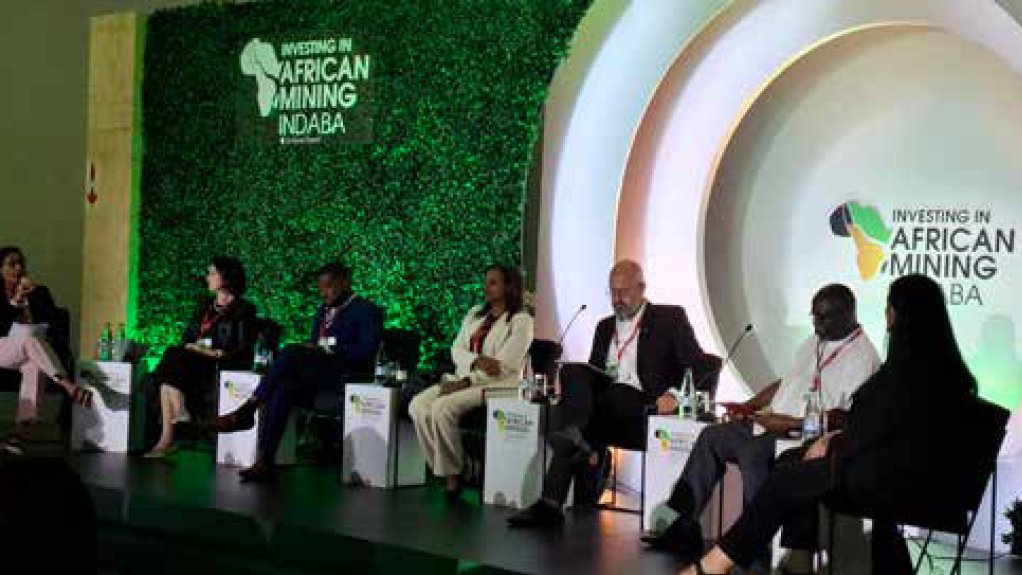

RESHAPING STRATEGIES The concept of critical minerals is not a fixed geological reality, but rather a policy and political construct shaped by national interests



The growing global focus on “critical minerals” is reshaping policy, investment and supply chain strategies, but African stakeholders are increasingly questioning whether the term – largely defined by external interests – aligns with the continent’s development priorities.
This was the central theme of a high-level panel discussion at Investing in African Mining Indaba 2026, where policymakers, financiers and industry leaders debated whether Africa should adopt, adapt or reject prevailing definitions of critical minerals.
Opening the discussion, International Institute for Sustainable Development intergovernmental forum director Isabelle Ramdoo noted that the concept of critical minerals is not a fixed geological reality, but rather a “policy and political construct” shaped by national interests. Countries in Europe and North America, for example, define critical minerals based on supply risk and their importance to energy transition and defence technologies.
However, panellists argued that Africa’s perspective must differ fundamentally.
Responsible Business Alliance senior director Fabiana Di Lorenzo highlighted that while Western countries prioritise securing supply for their own transitions, African nations are more focused on leveraging mineral wealth for industrialisation, job creation and broader economic development. She noted that Africa’s emerging policy frameworks, such as the African Green Minerals Strategy, reflect a much wider ambition that includes infrastructure, food security and local value chains.
Ghana Minerals Commission CEO Isaac Tandoh reinforced this point, stressing that “there is no one-size-fits-all definition” of critical minerals. He cited how geopolitical events, such as the Russia–Ukraine conflict, can rapidly shift what is considered “critical”, underscoring the need for context-specific definitions.
“Africa must define critical minerals in a way that serves our people’s wellbeing, industrialisation and future,” he said, adding that countries should prioritise minerals that support domestic development needs, not only export markets.
At a continental level, United Nations Economic Commission for Africa economics affairs officer Dr Marit Kitaw explained that Africa has deliberately avoided adopting the “critical minerals” label in its strategies. Instead, frameworks such as the African Mining Vision and the African Green Minerals Strategy emphasise value addition, industrialisation and inclusive growth.
“For us, it has always been about minerals working for development,” she said, noting that while the terminology has evolved globally, Africa’s underlying priorities have remained consistent for over a decade.
Kitaw added that the continent’s approach also recognises the dynamic nature of mineral demand. “What is critical today may not be critical tomorrow,” she cautioned, warning against rigid lists that could constrain long-term planning.
From an industry perspective, Valterra Platinum executive for corporate development Martin Poggliolini warned that such lists can also distort investment decisions. He pointed to the platinum group metals sector, which has experienced fluctuating perceptions of “criticality” despite its long-term strategic importance.
“There is danger in creating lists,” he said, noting that underinvestment by a range of parties, driven by shifting narratives can undermine supply and broader economic benefits.
While the label itself may have limited direct impact on operational strategies, panellists agreed that it does influence investor behaviour and policy direction. Absa Corporate and Investment Banking coverage head for resources and energy Shirley Webber explained that financing decisions are shaped by country risk, policy stability and market demand.
She noted that while traditional commodities such as copper and platinum can be hedged and financed more easily, emerging “green” minerals such as lithium and rare earths require more complex financing structures, often involving off-take agreements and strategic partnerships.
Crucially, Webber emphasised that future capital flows will increasingly depend on sustainability considerations, including environmental, social and governance factors and local economic impact.
A recurring theme throughout the discussion was the need for Africa to move beyond raw material exports towards beneficiation and downstream processing. Tandoh illustrated this with Ghana’s bauxite sector, noting the significant value gap between raw ore and refined aluminium.
“This is the time for Africa to bridge that gap,” he said, describing the current moment as a critical opportunity to capture greater value from mineral resources.
However, achieving this transition will require overcoming substantial structural challenges. South African State-owned mineral research organisation Mintek CEO Dr Molefi Motuku highlighted gaps in infrastructure, energy supply, skills and research and development (R&D) capacity as key constraints.
He pointed out that African countries invest significantly less in R&D compared with global leaders, limiting their ability to absorb technology and build competitive industries. “We are not putting our money where our mouth is,” he said, calling for greater investment in education, innovation and technical capabilities.
Regional collaboration was also identified as essential. While frameworks such as the African Continental Free Trade Area and regional economic communities exist, panellists acknowledged that implementation remains uneven, with countries often competing rather than cooperating.
Kitaw noted that while continental strategies provide a strong foundation, they are largely voluntary and depend on national adoption and alignment. “We are not in deficit of frameworks,” she said. “The challenge is implementation.”
Panellists further emphasised the importance of negotiating better agreements with international partners, including provisions for skills transfer, technology sharing and long-term industrial partnerships. Without such measures, Africa risks remaining locked into its traditional role as a supplier of raw materials.
Looking ahead, the discussion concluded with a call for greater agency and coordination across the continent. This includes defining Africa’s own priorities, strengthening regional integration, investing in skills and infrastructure, and ensuring that mineral wealth translates into tangible socioeconomic benefits.
As Tandoh succinctly put it: “If you don’t become the architect of your own destiny, someone else will define it for you.”
The message from the discussion was clear – while the global race for critical minerals intensifies, Africa’s success will depend not on adopting external definitions, but on shaping a development model that reflects its own ambitions and realities.
Article Enquiry
Email Article
Save Article
Feedback
To advertise email advertising@creamermedia.co.za or click here
Research Reports

Projects


Latest Multimedia
Latest News
Showroom
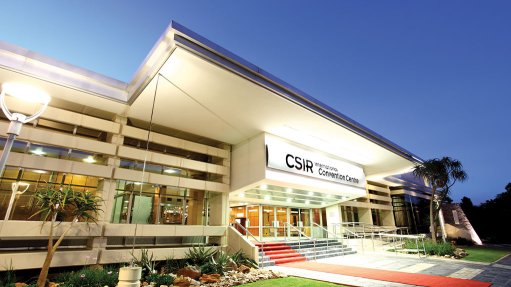
CSIR International Convention Centre (CSIR ICC) - the leading conference and events venue in Pretoria/Tshwane.
VISIT SHOWROOM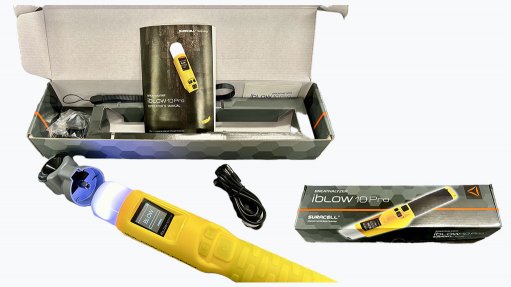
Supplier & Distributor of the Widest Range of Accurate & Easy-to-Use Alcohol Breathalysers
VISIT SHOWROOM
Announcements
What's On
Subscribe to improve your user experience...
Option 1 (equivalent of R125 a month):
Receive a weekly copy of Creamer Media's Engineering News & Mining Weekly magazine
(print copy for those in South Africa and e-magazine for those outside of South Africa)
Receive daily email newsletters
Access to full search results
Access archive of magazine back copies
Access to Projects in Progress
Access to ONE Research Report of your choice in PDF format
Option 2 (equivalent of R375 a month):
All benefits from Option 1
PLUS
Access to Creamer Media's Research Channel Africa for ALL Research Reports, in PDF format, on various industrial and mining sectors
including Electricity; Water; Energy Transition; Hydrogen; Roads, Rail and Ports; Coal; Gold; Platinum; Battery Metals; etc.
Already a subscriber?
Forgotten your password?
Receive weekly copy of Creamer Media's Engineering News & Mining Weekly magazine (print copy for those in South Africa and e-magazine for those outside of South Africa)
➕
Recieve daily email newsletters
➕
Access to full search results
➕
Access archive of magazine back copies
➕
Access to Projects in Progress
➕
Access to ONE Research Report of your choice in PDF format
RESEARCH CHANNEL AFRICA
R4500 (equivalent of R375 a month)
SUBSCRIBEAll benefits from Option 1
➕
Access to Creamer Media's Research Channel Africa for ALL Research Reports on various industrial and mining sectors, in PDF format, including on:
Electricity
➕
Water
➕
Energy Transition
➕
Hydrogen
➕
Roads, Rail and Ports
➕
Coal
➕
Gold
➕
Platinum
➕
Battery Metals
➕
etc.
Receive all benefits from Option 1 or Option 2 delivered to numerous people at your company
➕
Multiple User names and Passwords for simultaneous log-ins
➕
Intranet integration access to all in your organisation